Charc's alpha is now public
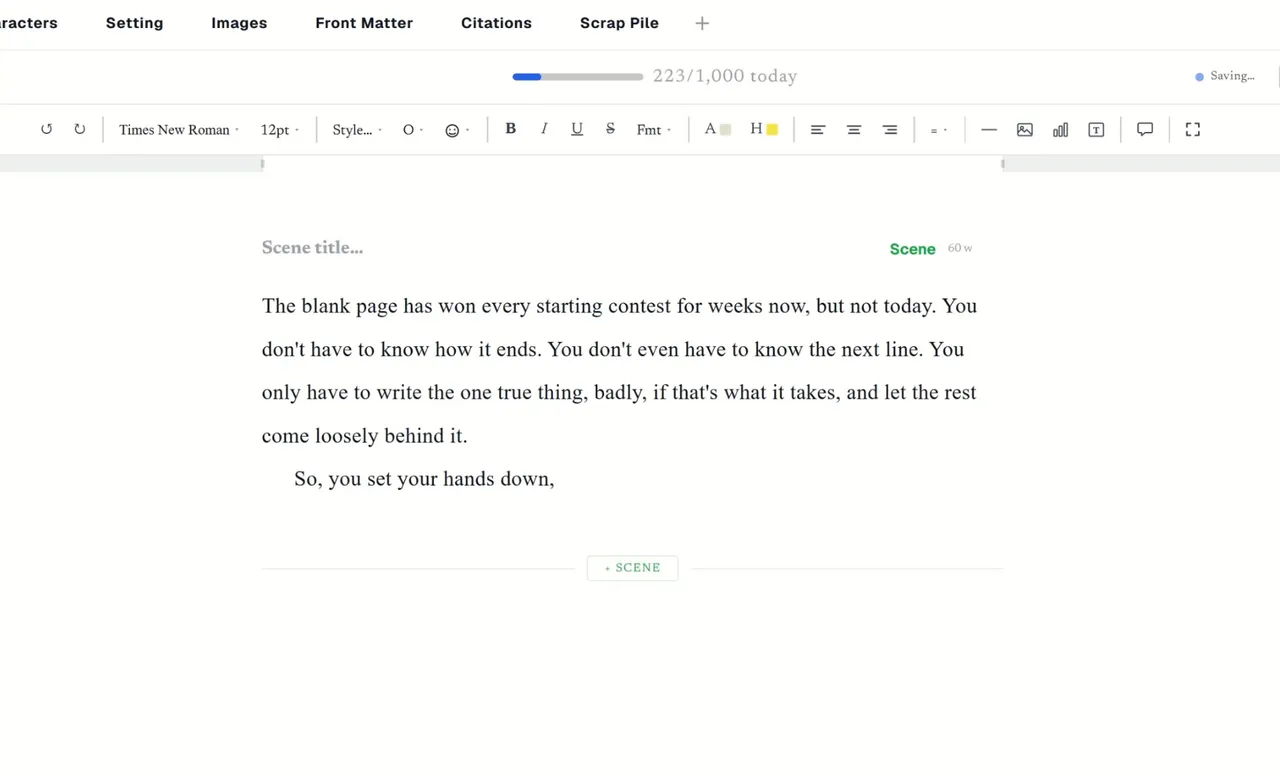
Charc is open. As of now, anyone can sign up, open a blank page, and start writing. A quick, honest look at where the app is today — and the roadmap between here and beta.
Read articlePractical advice on craft, process, and tools — for writers at every stage of their first or fifth book.
Charc is open. As of now, anyone can sign up, open a blank page, and start writing. A quick, honest look at where the app is today — and the roadmap between here and beta.
Read articleThe dashboard, the tabs, and what everything does — with a full screen recording of a project going from blank page to first paragraph.
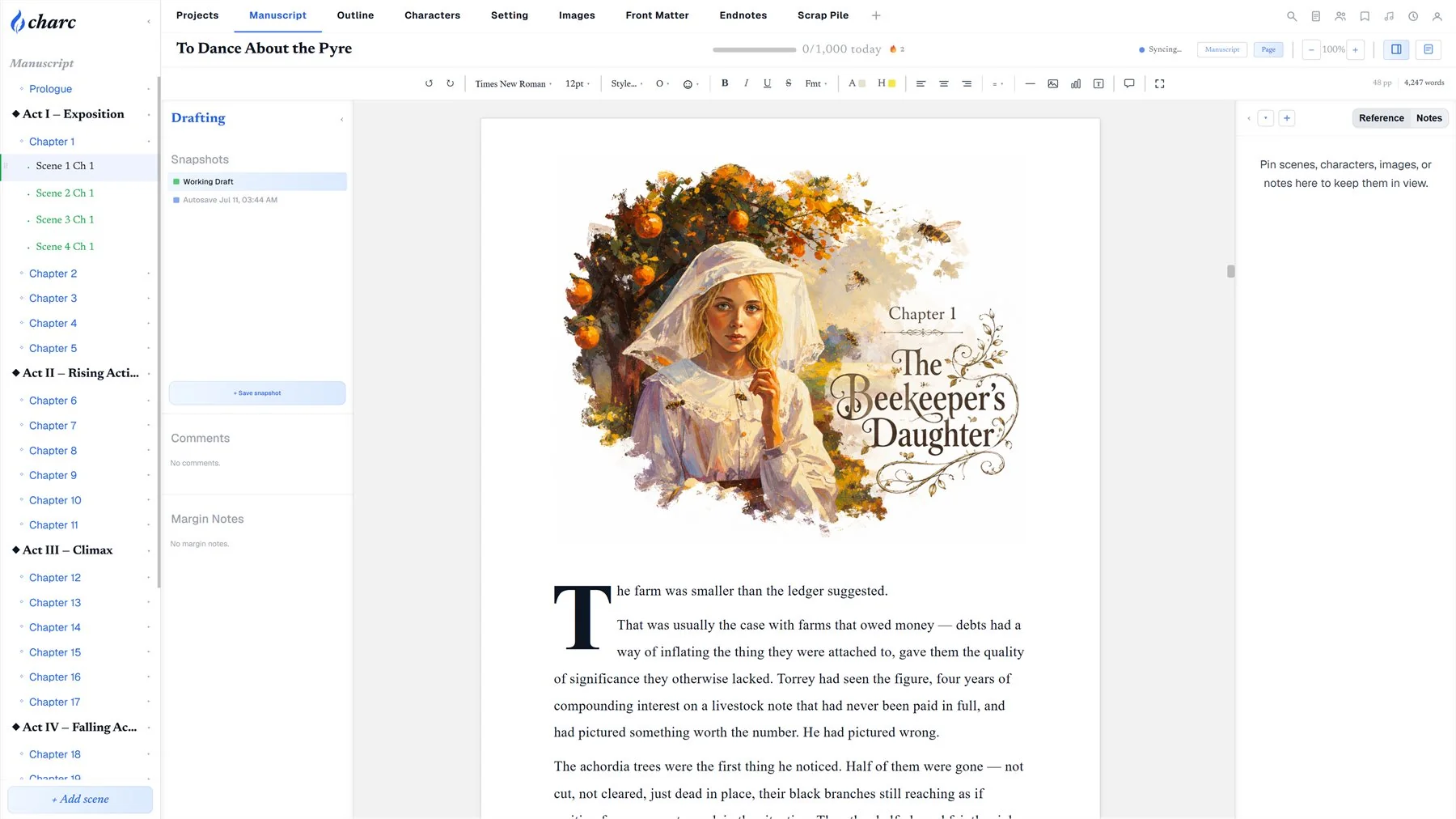
Read articlePageless and page view, the toolbar, scenes as the unit of writing, snapshots, and focus mode — what the editor does, and what it deliberately doesn’t.
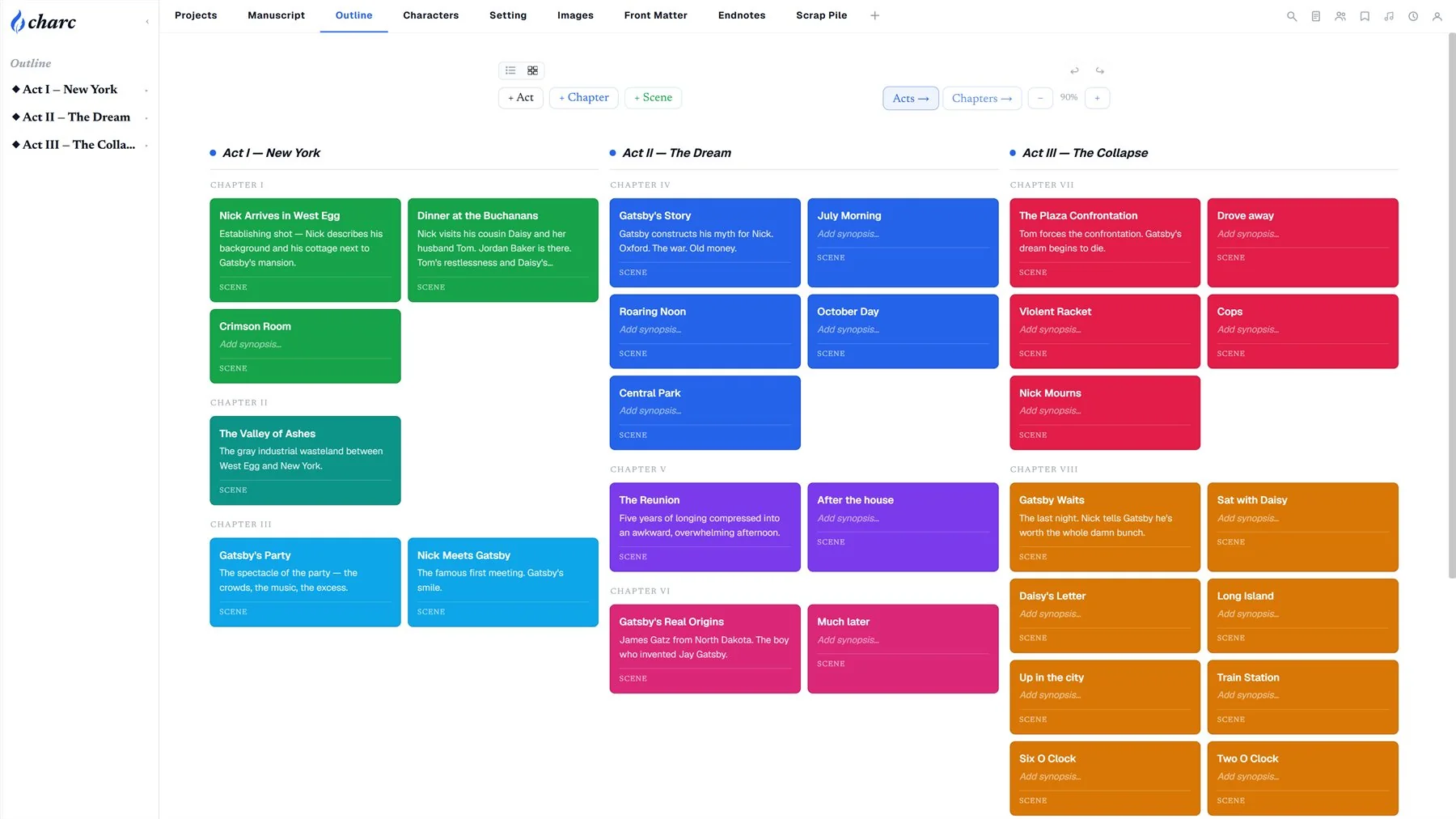
Read articleActs, chapters and scenes — how the outline works, how to reorder it, and how it stays in sync with everything you write.
Read articleCharacters, locations and custom tabs, project documents, and the reference panel that keeps all of it beside your draft while you write.
Read articleThe project dashboard, draft phases, word targets from the book down to the scene, and the daily goal that builds streaks — all fed by the writing itself, never by data entry.
Read articleThe Compile & Export window from top to bottom — what goes in, page styles, every file format, presets, and the one backup habit this series insists on.
Read articleFormats as reusable design bundles — trim sizes, facing-page margins, body typography, chapter openings, running heads, and the page view that proves it all while you write.
Read articleTitle pages, copyright, dedications and epigraphs built from templates — droppable anywhere in the book — plus covers as true print spreads with the spine math done for you.
Read articleThe three roles and what each can touch, live presence and scene locks, margin comments, editor copies that stay separate until adopted, and read-only links for beta readers.
Read articleWord, Scrivener and Fountain imports — how the chapter and scene split works, what survives the trip, and why nothing is final until you approve the preview.
Read articleTen habits that make the workspace disappear — snapshots before rewrites, living outlines, reference rituals, honest progress tracking, and local backups for peace of mind.
Read articleA general workspace writers bend into a writing tool, versus one built as a writing tool — what each does well, what each costs, and who should stay where.
Read articleA deep editing engine and a writing workspace are different tools — what each does, what each costs, and where your manuscript travels.
Read articleScrivener earned its reputation over twenty years. A fair, feature-by-feature look at both — including where Scrivener is still the better choice.
Read articleYou don't have to choose between plotter and pantser. The best outlining systems give you enough structure to move forward without boxing in the story.
Read articleCharacter sheets are a starting point, not an ending. What makes fictional people feel alive is not their backstory — it's the specific way they move through pressure.
Read articleThe secret isn't willpower or word count goals. It's reducing friction and protecting a sliver of time that's genuinely yours — even on the hard days.
Read articleEvery novel you read is a masterclass. The trick is switching from reader mode to student mode — asking not just what happened, but why it worked.
Read article